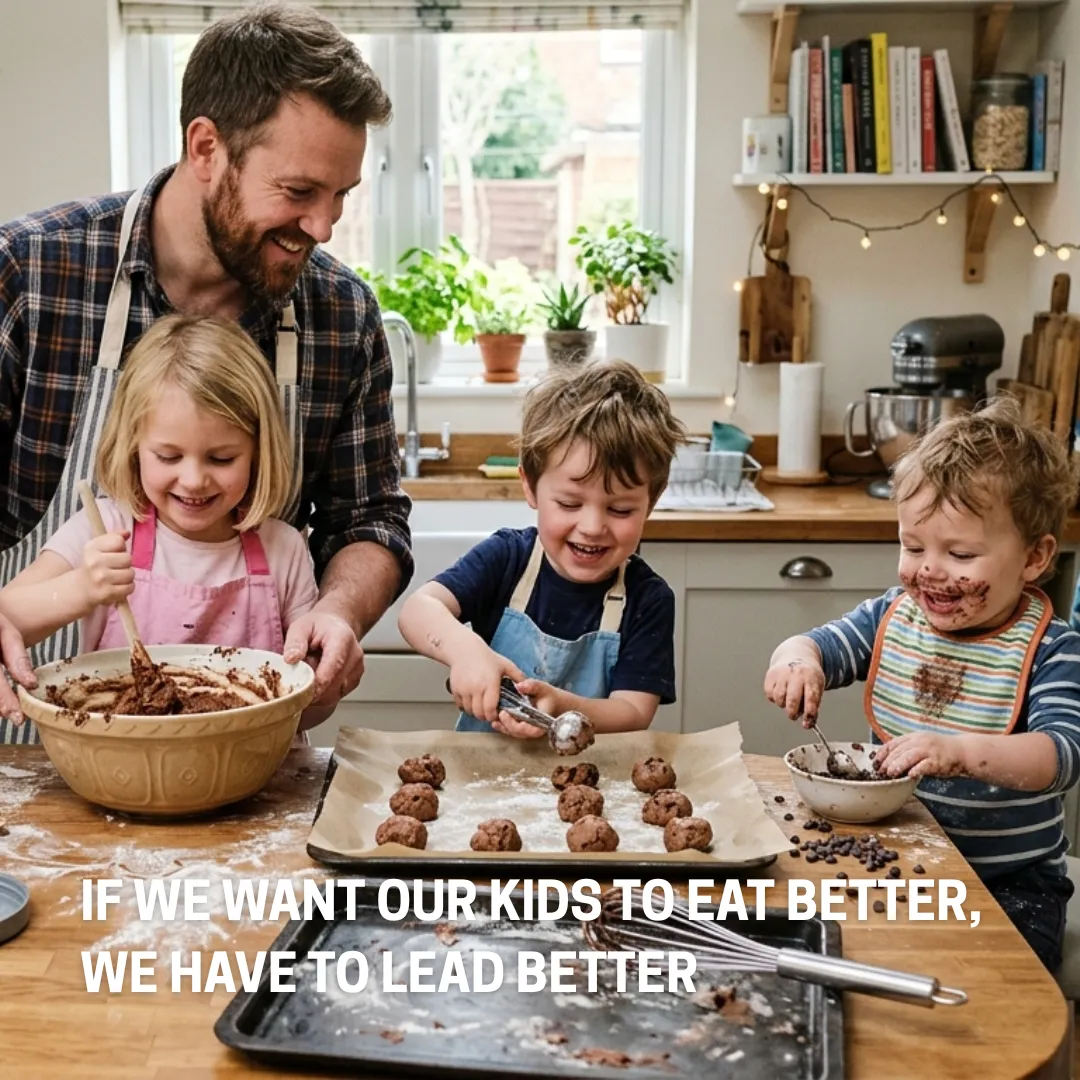
If We Want Our Kids to Eat Better, We Have to Lead Better
The Snack Moment That Made Me Stop
Over the past few months, I’ve been changing the way I eat. Not in a dramatic, “throw everything away and become a health expert overnight” kind of way. More like a steady awakening. I started cooking more, learning ingredients, paying attention to how different foods made me feel, and noticing what helped me function better throughout the day.
Then one day, the realization hit me in a very normal dad-life kind of moment.
We were letting the kids get snacks.
Nothing unusual. Nothing wild. Just the kind of everyday snack situation most families deal with. But as I looked at the sugary, processed options that so easily slip into a home, I had this thought:
Why are we letting this become normal if we could learn how to make better versions ourselves?
That was the moment this became more than food for me.
It became leadership.
The Drift Happened in the Snack Gaps
For us, the problem was rarely breakfast, lunch, or dinner. Those meals usually had some kind of structure around them. The drift happened in the snack gaps — those little “I’m hungry” moments between meals when everyone is busy, nobody wants to think too hard, and the fastest option starts becoming the normal option.
That’s where the household food culture was quietly being shaped.
And once I saw that, the question changed from, “What can we give them quickly?” to, “What can we make or prepare that actually helps them feel good afterward?”
That’s a different question.
It takes more effort, sure. But it also puts leadership back into the moment.
I’m Not a Nutritionist. I’m a Dad Paying Attention.
I want to be clear here. I’m not coming at this as a nutrition expert. I’m coming at this as a dad who lives in the house and watches how his kids respond to the day.
I notice moods.
I notice focus.
I notice behavior.
I notice when everyone seems more settled, and I notice when everyone feels like they are bouncing off the walls.
And the more I learned about food for myself, the more I started asking a very simple question: If eating better helps me feel calmer, more focused, and more steady, why wouldn’t I want to help my kids experience that too?
That doesn’t mean we become fearful around food.
It means we become awake.
The Protein Cookie That Changed the Conversation
This wasn’t some perfectly planned health-food experiment. It was more like, “Okay, what healthy things do we already have in the house?”
We had some leftovers from the last grocery run — Greek yogurt, cocoa powder, eggs, flour, lite butter, coconut sugar or stevia, and chocolate hazelnut vegan protein powder. Not because we’re vegan or trying to make some kind of statement. The regular protein powder just wasn’t available that time, so this was what we had.
My kids wanted cookies.
I wanted something healthier.
So we pulled out my wife’s phone, used Gemini, and started asking, “How do we turn what we already have into something fun they’ll actually eat?”
A few minutes later, we had a recipe.
Then the real experiment started.
The dough was too wet at first. Then it was like loose frosting. Then after adding a little more flour, it hit that peanut-butter consistency. One batch came out more like a soft little cake cookie than a regular cookie, which honestly worked out great.
And the kids loved them.
That is the part I loved.
It wasn’t just “Dad made a healthy snack.”
It became: Let’s learn. Let’s adjust. Let’s taste. Let’s make this better together.
In Case You’re Curious, Here’s the Cookie-Cake Recipe We Used
Ingredients:
1 cup flour, plus 2 extra tablespoons if needed
1 scoop chocolate hazelnut protein powder
2 tablespoons cocoa powder
1/4 cup stevia baking blend or 1/3 cup coconut sugar
1/4 cup lite butter
1/4 cup Greek yogurt
1 egg
Optional: 1–3 tablespoons milk only if the dough is too dry
Simple Directions:
Mix the wet ingredients first, then add the dry ingredients. If the dough is too wet, add flour one tablespoon at a time until it is closer to peanut-butter consistency. Scoop onto a greased baking sheet and bake at 350°F for 10–12 minutes. Let them sit on the tray for about 10 minutes after baking so they can set.
Ours came out more like soft cookie-cakes than regular cookies, and the kids loved them.
Better Snacks Help the Whole House
The protein cookies gave our kids something sweet, fun, and filling. That matters.
Because one of the frustrating things about many sugary snacks is that they don’t actually satisfy. The kids eat them, enjoy them for a moment, and then soon they want more. More sugar. More snacks. More quick energy.
But when the snack has more protein and better ingredients, it can actually help them feel full.
That has been huge for us.
Sometimes our kids don’t want much dinner. That happens. They are kids. Some days they eat like they are training for a marathon, and other days they look at dinner like it insulted them personally.
So when we can offer a snack that gives them something more substantial, it brings peace of mind.
It feels like we are helping their bodies, not just quieting their hunger.
Learning to Cook Is Part of Loving Them
I’ll be honest: learning to cook healthier has been a discipline.
It takes effort to learn ingredients. It takes effort to read labels. It takes effort to figure out what works with the equipment you have and the budget you have. It takes effort to make something, realize the texture is off, and then try again.
But that effort is worth it.
Because the more I’m willing to pay that price, the better my kids’ lives can be.
And I’ve seen it in my own body too. When I start the day with enough protein — eggs, yogurt, or something filling — I don’t need to eat as much before lunch. My focus is better. I’m calmer. I’m steadier under stress.
That matters for me as a man.
It matters for me as a husband.
It matters for me as a dad.
If I know food affects how I show up, then I cannot pretend food has nothing to do with how my kids show up.
This Is Not About Being Weird or Fearful With Food
Now, let’s keep this grounded.
This is not about becoming elitist. This is not about acting like your family can never eat a donut again. This is not about creating fear around every ingredient or making your kids feel guilty for enjoying a treat.
That would miss the point.
The point is awareness.
The more we understand what we are eating, the more informed our decisions become. If we choose a junky snack one day, we can choose it knowingly, not blindly. If we choose to spend a little more on better ingredients, we can do that because we understand what we’re investing in.
Food leadership is not panic.
It is stewardship.
My Wife and I Are Learning Together
This has not just been my thing. My wife and I have been learning together.
Sometimes she learns more about ingredients. Sometimes I learn more about cooking. Sometimes we both look at what we have in the kitchen and ask, “Okay, what can we make with this?”
That team dynamic matters.
Because if food becomes one parent’s crusade, it can turn into pressure. But when it becomes something you learn together, it becomes part of the family culture.
The kids get to see us experiment. They get to see us ask questions. They get to see us improve.
And honestly, cooking snacks together can become a bonding activity.
Not every family moment has to be a trip to the park or a movie night. Sometimes connection looks like standing in the kitchen, adjusting the batter, laughing when the first batch comes out like cake, and saving the idea for next time.
And now we’re on to our next experiment.
My youngest son wants ice cream and I want healthy ice cream, so we’re gonna learn how to make that.
What I’d Tell the Busy Dad
If you’re thinking, “I don’t have time to make homemade snacks,” I get it.
But let me encourage you: start smaller than you think.
This cookie recipe takes about 20 to 30 minutes depending on how soft or firm you want them. That’s not nothing, but it’s not impossible either. And when you bring the kids into it, it stops feeling like one more task and starts becoming a family activity.
You’re not just making cookies.
You’re teaching your kids that food can be made, not just bought.
You’re teaching them that healthy can still taste good.
You’re teaching them that Dad is willing to learn something new because their well-being matters.
That is leadership.
A Simple Starter Rhythm
Here’s where I would start.
Pick one snack your kids already like. Cookies. Ice cream. Muffins. Chocolate treats. Whatever it is.
Then ask, “How can we make a better version of this at home?”
Not perfect.
Not Instagram-worthy.
Just better.
Maybe you reduce the sugar. Maybe you add Greek yogurt. Maybe you add protein powder. Maybe you swap in coconut sugar. Maybe you simply start reading the ingredients on the box and learning what is actually in the food.
One snack.
One recipe.
One small experiment.
That is enough to begin.
The Deeper Lesson
Parenting is not only correcting behavior.
It is not only teaching chores.
It is not only making sure they say please and thank you.
Parenting also includes caring for what goes into their bodies.
That may not sound spiritual at first, but I believe it is. These children are gifts from God. Their bodies matter. Their minds matter. Their emotions matter. Their energy matters. And as fathers, part of our leadership is learning how to steward those things with love.
Not perfectly.
But intentionally.
Next Steps
If you want help building practical rhythms like this into your home, start with the Home Leadership Framework. It is designed to help dads lead with clarity and intention in the ordinary places where family culture is actually formed.
And when you’re ready to build a deeper, more complete system for faith, family, health, finances, and purpose, the Five Pillars Alignment Course is the next step.


